
Hydrangea: April 2018 Houseplant of the Month
The story of the hydrangea
Almost everyone associates the light and sweetly fragranced hydrangea with the long, light days of spring. It’s a very popular houseplant with large round umbels bursting with star-shaped flowers in fabulous colours that bloom profusely for a long time. The plant offers a decorative, cheerful and rich appearance thanks to their green leaves and is an indoor foretaste of summer, when garden hydrangeas flower. When the frosts have passed, the hydrangea can also be placed on the patio or in the garden for a second life as a garden plant.
Almost everyone associates the light and sweetly fragranced hydrangea with the long, light days of spring. It’s a very popular houseplant with large round umbels bursting with star-shaped flowers in fabulous colours that bloom profusely for a long time. The plant offers a decorative, cheerful and rich appearance thanks to their green leaves and is an indoor foretaste of summer, when garden hydrangeas flower. When the frosts have passed, the hydrangea can also be placed on the patio or in the garden for a second life as a garden plant.
Origin
The plant is native to South and East Asia and North and South America. Some species have developed into large trees, whilst others remain small compact shrubs. In Europe hydrangeas have traditionally often been grown near farms, where long rows grow alongside the water. The name Hydrangea refers to its most important requirement - it regularly needs water (hydra).
The plant is native to South and East Asia and North and South America. Some species have developed into large trees, whilst others remain small compact shrubs. In Europe hydrangeas have traditionally often been grown near farms, where long rows grow alongside the water. The name Hydrangea refers to its most important requirement - it regularly needs water (hydra).
 What to look for when buying hydrangeas
- Check that the plant’s structure is compact: a somewhat bare, stretched base indicates old growth.
- How ripe are the flowers? Ideally they should already be showing a bit of colour. Check this when buying or ask for a photo.
- It’s important that the plant is in a sleeve and the soil is sufficiently damp at the time of purchase, so that drooping and damage during shipping or storage are prevented.
- If too much moisture (condensation) remains between the leaves or under the flower for a long time, this can cause the fungus Botrytis.
Range
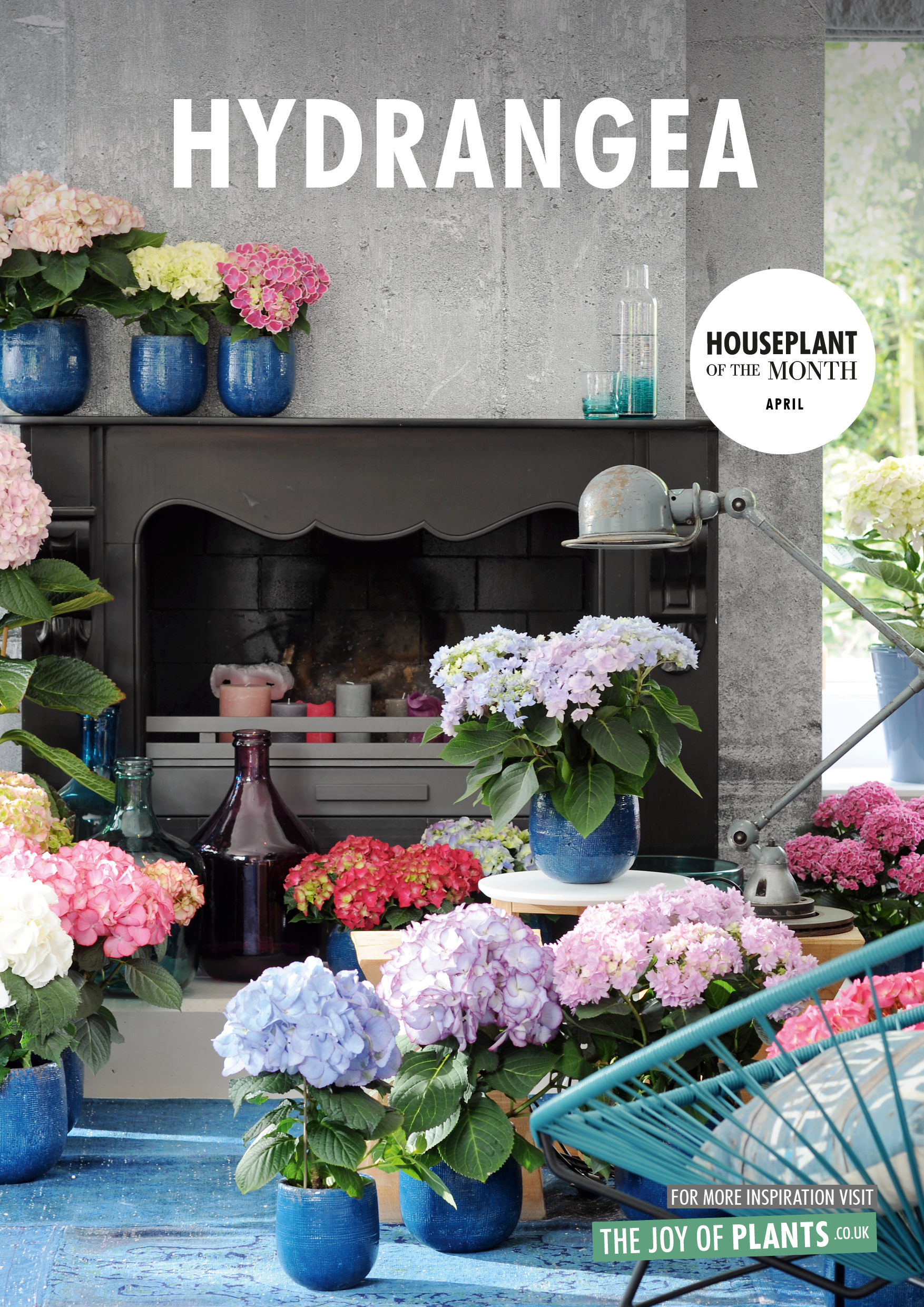
As a houseplant hydrangeas are available in white, green, blue, lilac, purple and various shades of pink. Notable varieties are those that change colour during flowering. A distinction is made within the hydrangea houseplant range according to the form of flowering: in globes or on the edges, the ‘lacecaps’. The plant shape can also be differentiated: standard, in hanging pots, in a pyramid shape or plants with 15 or more umbels. The smaller pot sizes are most popular indoors. Many hydrangeas are also available with about three flowers which are very suitable for small spaces in the home.
As a houseplant hydrangeas are available in white, green, blue, lilac, purple and various shades of pink. Notable varieties are those that change colour during flowering. A distinction is made within the hydrangea houseplant range according to the form of flowering: in globes or on the edges, the ‘lacecaps’. The plant shape can also be differentiated: standard, in hanging pots, in a pyramid shape or plants with 15 or more umbels. The smaller pot sizes are most popular indoors. Many hydrangeas are also available with about three flowers which are very suitable for small spaces in the home.

Care tips for consumers
- Hydrangeas cannot cope with drought. Avoid drooping, ensure that the plant always has slightly damp soil.
- The plant prefers a light spot, but not in direct sunlight or near a source of heat. A position that is too warm can have negative effect on flowering.
- Because the hydrangea uses a lot of energy on growing and flowering, it’s a good idea to feed with some plant food once a fortnight.

Thank you to Flower Council of Holland for the information and Joy of plants for the images.
A few varieties available as cut flowers. Blue, pink and white are available just about through the year but some of the other colours are seasonal dependant as the flower matures.

This is a brilliant flower for your wedding, especially in summer or through autumn when the greatest colour range is available. It may be more expensive than some flowers but you get excellent coverage per bloom and in some cases it can work out more budget friendly.

From large WOW factor table centrepieces teamed with roses,

to a flower ring of blooms en mass

or a single bloom for your bridesmaid to carry, they make an excellent choice for your special day.
If you are wanting hydrangeas as plants or cut flowers talk to us about your requirements and we can source the prefect blooms for you.
Sandra xx


